Leave Your Message
0%

As the need for more efficient energy solutions keeps growing, Motor Inverters are becoming pretty essential across different industries. Looking ahead to 2026, we can expect some shifts in who's leading the market. So, knowing these trends is super helpful if you're trying to make smart purchasing choices.

Big names like Siemens, Schneider Electric, and ABB are really pushing the boundaries and redefining standards. But, hey, don't forget — new players and fresh innovations could shake things up quite a bit. It’s definitely worth keeping an eye on the latest tech developments.

When you're picking out a motor inverter brand, doing thorough research is a must. Not all companies are created equal when it comes to reliability and performance. Sometimes, spreading your purchases across different suppliers can help dodge potential risks. At the end of the day, this choice can have a big impact on how smoothly your operations run. The market’s pretty complicated, so it's smart to stay open-minded — don’t shy away from considering lesser-known brands too.


Top 10 Motor Inverter Brands for Global Buyers in 2026?

Top 10 Motor Inverter Brands for Global Buyers in 2026

Top 10 Motor Inverter Brands for Global Buyers in 2026?

In 2026, the demand for efficient motor inverters continues to grow. Global buyers seek reliable solutions for Motor Controlapplications across various industries. The right inverter can enhance Energy Efficiency and optimize performance. Buyers should consider brands known for their innovation and durability.

Choosing the right brand is challenging. Many options exist, each with unique features. Performance, support, and adaptability are crucial factors. It's essential to research and test products before making a decision. Effective Motor Control can greatly impact productivity and energy consumption.

Evaluating technical specifications helps in understanding inverter capabilities. Some brands excel in specific niches, while others offer a broader range. Keep in mind that not all brands will meet your unique needs. Users often find surprises in performance versus expectations. Therefore, gathering insights from existing users can guide informed purchases.

Market Overview of the Motor Inverter Industry in 2026

The motor inverter industry is poised for significant growth by 2026. According to a recent market analysis report, the global motor inverter market size is expected to reach over $30 billion. This expansion is driven by increasing demand across various sectors, including automotive, Industrial Automation, and renewable energy systems. The need for energy efficiency and sustainable practices has accelerated the adoption of motor inverters.

The technology behind motor inverters is evolving rapidly. The rise of electric vehicles and smart automation solutions is leading to more innovative designs. Many companies are investing heavily in research and development to enhance inverter performance. In 2026, high-efficiency inverters will likely dominate the landscape, emphasizing lower energy consumption and improved performance metrics. However, challenges remain. Market players must navigate supply chain disruptions and fluctuating raw material prices.

Market trends indicate a shift toward integrated solutions. Buyers are showing a preference for inverters that can seamlessly connect with existing systems. This integration allows for better control and efficiency. Despite these advancements, it’s crucial for companies to reflect on their operational capabilities and market positioning. They need to be agile to adapt to emerging technologies and consumer demands. The future of the motor inverter industry is promising, but it requires careful strategy and ongoing innovation.

Leading Features and Technologies in Motor Inverter Design

Motor inverters play a crucial role in modern automation. They control the speed and torque of electric motors, enhancing efficiency. Advanced motor inverter designs incorporate features that optimize performance while ensuring reliability. One key technology is pulse width modulation (PWM), which reduces energy loss during operation. This allows for smoother motor control and extends the lifespan of equipment.

In addition to PWM, many inverters now include enhanced Motor Protection features. These systems help prevent overheating and overcurrent, ensuring safe operation. They often incorporate fault detection algorithms, which can predict potential failures before they happen. This proactive approach promotes operational continuity and reduces maintenance costs.

However, the evolving complexity of motor inverter technologies poses challenges. Engineers must continually adapt to new advancements. Understanding these innovations is essential for effective implementation. Manufacturers must also ensure that their designs align with global regulations. This ongoing need for improvement underscores the importance of expertise in the field of motor inverters and their applications.

Understanding Regional Markets for Motor Inverters: A Global Perspective

The global market for motor inverters is vast and varied. Understanding the regional dynamics is essential for buyers. Different areas have unique preferences and industrial needs. The advancements in Vfd Motor Control technology are reshaping how industries use these inverters. In regions with a strong focus on renewable energy, efficient inverters are crucial. They help integrate solar and wind power into existing grids.

Market trends show a rising demand for cost-effective solutions. Buyers need to consider local regulations and support structures. In some regions, technical support is limited. This can lead to challenges in implementation and maintenance. The complexity of Vfd Motor Control adds another layer. Many buyers underestimate the importance of training and after-sales service.

Emerging markets offer opportunities but come with risks. Understanding local competition is vital. Some regions may lack reliable supply chains. This can hinder timely access to necessary components. As technology evolves, staying informed is key. The landscape of motor inverters is not static. New innovations will likely change buyer strategies moving forward. Adaptability will be crucial in navigating these changes.

Top 10 Motor Inverter Brands for Global Buyers in 2026

Rank Region Market Share (%) Revenue (Million USD) Key Applications
1 North America 25.0 1200 Industrial Automation
2 Europe 22.5 1100 Renewable Energy
3 Asia-Pacific 30.0 1500 Consumer Electronics
4 Latin America 12.0 560 HVAC Systems
5 Middle East & Africa 10.5 450 Water Treatment
6 Global 15.0 700 Electric Vehicles
7 North America 20.0 950 Robotics
8 Europe 28.0 1300 Transportation
9 Asia-Pacific 18.5 850 Aerospace
10 Latin America 9.5 400 Mining

Performance Metrics: Comparing Efficiency and Reliability Across Brands

As we approach 2026, motor inverters play a crucial role in various industries. When selecting a brand, efficiency and reliability are key performance metrics to consider. Reports indicate that the average efficiency of leading inverter models often peaks at 95%. However, some brands struggle to maintain this standard, with certain models falling below 85%. This disparity can significantly impact operational costs and longevity.

Reliability is another critical factor. Data suggests that top-performing inverters commonly feature MTBF (Mean Time Between Failures) ratings exceeding 100,000 hours. In contrast, lesser-known brands may average only 50,000 hours. Buyers must assess these metrics carefully. Focusing only on price may lead to costly downtimes and repairs.

Tip: When researching, pay attention to user reviews. Real-world experiences often highlight issues not covered in specs. Comparing warranty offerings is also essential. A longer warranty often reflects confidence in product reliability. Seek brands that provide comprehensive support and service options, as these can reduce operational risks significantly.

Key Players in the Motor Inverter Market: Sales Data and Market Shares

Top 10 Motor Inverter Brands for Global Buyers in 2026?

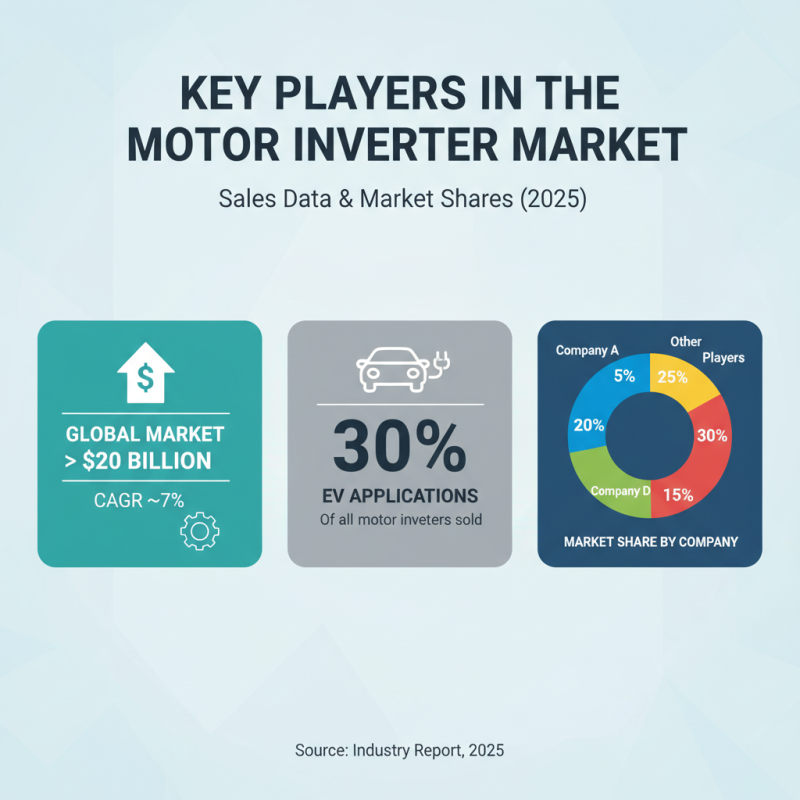
The motor inverter market continues to evolve, driven by demand across various industries. In 2025, the global market is expected to exceed $20 billion, reflecting a CAGR of around 7%. This growth highlights the increasing adoption of electric vehicles and renewable energy systems. A recent report revealed that approximately 30% of all motor inverters sold in 2025 will be for electric vehicle applications, underlining a significant shift in market dynamics.

Sales data indicate that leading players are focusing on innovation. Companies are investing in high-performance inverters that enhance energy efficiency. Some reports suggest that high-frequency inverters may dominate the sector by 2026, capturing over 40% of the market. However, challenges remain. The rising costs of raw materials can impact overall pricing competitiveness. Each brand's market share fluctuates as new technologies emerge. This variability requires buyers to stay informed about changes in both product performance and pricing strategies.

In terms of geographic distribution, Asia-Pacific is projected to hold the largest share, largely due to manufacturing hubs. North America and Europe are witnessing strong growth as well, particularly in renewable energy sectors. Yet, not all brands have managed to adapt. Some traditional players lag behind in technological advancements and may struggle to retain market relevance. Continuous innovation and adaptability will be crucial for success in the coming years.

Future Trends: Innovations Shaping the Motor Inverter Landscape

The motor inverter market is undergoing significant transformations. Innovations in technology are driving efficiency and performance improvements. Reports indicate that the global motor inverter market size is anticipated to reach $20 billion by 2026. This growth highlights the importance of advanced Hvac Motor Control in various applications, including renewable energy, industrial automation, and electric vehicles.

Recent advancements include the integration of AI and IoT in motor inverter systems. These technologies enable predictive maintenance, which can reduce downtime by up to 30%. Moreover, a shift toward energy-efficient designs is prominent. A recent study shows that energy-efficient motor inverters can lead to cost savings of approximately 40% over their lifecycle. Industry leaders are adopting these innovations to enhance sustainability and meet regulatory standards.

However, the rapid pace of change poses challenges. Many companies struggle with integrating new technologies into existing frameworks. This can lead to gaps in performance and reliability. As the landscape evolves, industries must continually reassess their approach to HVAC motor control. Staying ahead requires adaptability and insight into emerging trends.

Top 10 Motor Inverter Brands for Global Buyers in 2026

This chart displays the projected market share of various motor inverter brands in 2026, illustrating the competitive landscape and trends influencing the industry.

Unlocking Efficiency: The Advantages of SHSS500 High-Performance Vector Frequency Inverter for Modern Industries

The SHSS500 high-performance vector frequency inverter is transforming the landscape of modern industries by unlocking remarkable efficiency through its advanced vector control technology. This innovation enables precise regulation of motor speed and torque, essential for enhancing operational performance in various applications. With features such as a speed regulation ratio of up to 1:200 and a minimal speed accuracy error of just 0.5%, these inverters allow for exceptional responsiveness to varying load conditions. This ensures that equipment operates smoothly and reliably, significantly reducing the risks of downtime and operational inefficiencies.

Energy efficiency is another cornerstone of the SHSS500 inverter's advantages. By intelligently matching energy consumption with load requirements, it can achieve reductions in energy use by over 30% when compared to conventional driving methods. This not only contributes to lower operational costs but also aligns with global initiatives aimed at sustainability. Furthermore, the inverter's rapid response capability during sudden load changes—reacting within milliseconds—ensures system stability, making it an excellent choice for industries looking to enhance productivity while minimizing energy expenditures.

FAQS

: What should buyers consider when looking for motor inverters?

: Buyers need to consider local regulations, support structures, and industry preferences. These factors vary by region.

Why is training important for using motor inverters?

Many buyers underestimate training needs. Without proper training, challenges in implementation and maintenance arise.

How do emerging markets impact motor inverter supply?

Emerging markets offer opportunities but come with risks. Some regions may have unreliable supply chains, hindering access to components.

What role do efficiency and reliability play in motor inverters?

Efficiency affects operational costs, while reliability determines lifespan. Buyers should not focus solely on price.

Why are user reviews important when selecting an inverter?

User reviews reveal real-world issues that specifications might not cover. This can prevent unexpected operational challenges.

What factors influence the pricing of motor inverters?

The rising costs of raw materials and technological advancements affect overall pricing competitiveness in the market.

How is the motor inverter market expected to grow by 2025?

The global market is projected to exceed $20 billion, reflecting a CAGR of around 7%, driven by electric vehicles and renewable systems.

What market trends should buyers watch for?

Trends include a shift toward high-frequency inverters and the growing importance of adaptability in the face of emerging technologies.

What is the significance of warranty offerings for motor inverters?

Longer warranties often reflect confidence in product reliability and reduce risks associated with downtimes and repairs.

How does the geographic distribution of the market differ?

Asia-Pacific leads in market share, with significant growth in North America and Europe, particularly in renewable energy sectors.

Conclusion

The article "Top 10 Motor Inverter Brands for Global Buyers in 2026" provides a comprehensive overview of the motor inverter industry, highlighting key trends and innovations expected to shape the market. By 2026, advancements in motor inverter design will likely focus on enhancing efficiency and reliability, crucial metrics for buyers across various regions. This global perspective explores how regional markets are adapting to these changes, with an emphasis on performance metrics that compare different products in the market.

As the demand for energy-efficient solutions rises, understanding the leading features and technologies in motor inverters will be vital for global buyers. The article also analyzes sales data and market shares of prominent players in the motor inverter sector, setting the stage for strategic decisions in procurement. Overall, the insights provided aim to guide buyers in navigating the evolving landscape of motor inverters in the near future.

Benjamin

Benjamin

Benjamin is a dedicated marketing professional at Zhejiang Shuoshi Electric Technology Co., Ltd., where he plays a vital role in promoting the company's commitment to energy-saving, emission-reducing, low-carbon, and environmentally friendly high-tech products. With a deep understanding of the......
Previous 2026 Best Solar Inverter Options for Global Buyers?