Picking the right Regenerative VFD really can make a big difference in how efficiently your system runs and how smooth your operations are. Honestly, with so many options out there, it can feel pretty overwhelming trying to decide. That’s why it’s super important to get a good handle on how these systems actually work before making a call.
Think about where you'll be using the VFD. Is it for a specific kind of motor, or maybe for a more complicated process? Also, the size of your equipment and how much load it’s handling are worth considering. If you pick the wrong one, it might not do what you’re expecting, which could mean wasting money or dealing with inefficiencies.
Next up, look at the features that are really important for you. Some VFDs come packed with fancy control options, while others keep it pretty simple. Take some time to figure out what’s a must-have versus what’s just extra stuff you really don’t need. Sometimes, going for less can actually be smarter. Just make sure your choice matches how you’ll actually use it—that way, you’re likely to get the best results without overcomplicating things.
Understanding Regenerative VFDs: A Brief Overview
Understanding regenerative Variable Frequency Drives (VFDs) is key for many industrial applications. These devices help control motor speed by recovering energy. This energy, instead of being wasted, is fed back into the system. Regenerative VFDs play a vital role in energy efficiency. They reduce overall consumption and can lower operating costs. Many industries can benefit greatly from this technology.
In choosing regenerative VFDs, it's crucial to consider specific application needs. Matching the VFD to your motor specifications is essential. With complex systems, compatibility issues can arise. It's not uncommon to realize a mismatch during installation. This can lead to inefficiencies or operational failures. Pay attention to load requirements and control methods. For example, consider whether a simple control will suffice or if you need a more advanced system.
Integration is another important factor. Most facilities have existing setups. Finding a regenerative VFD that blends seamlessly is a challenge. You may need to evaluate your current setup extensively. Testing is essential. An Abb Vfd might seem perfect in theory, but real-world applications can present hidden obstacles. Reflecting on your specific needs will guide you in this process.
Key Benefits of Using Regenerative VFDs in Industrial Applications
Regenerative Variable Frequency Drives (VFDs)have become crucial in industrial settings. They recycle energy back to the Power Supply during deceleration phases, which increases efficiency. A recent report from theDepartment of Energy noted that regenerative VFDs can reduce energy consumption by up to 30%. This reduction directly impacts operational costs and promotes sustainability within manufacturing processes.
Another key benefit lies in extended equipment life. By reducing mechanical stress on motors and systems, regenerative VFDs foster smoother operation. The National Electrical Manufacturers Association (NEMA) highlighted that machines operating with regenerative drives experience fewer breakdowns, leading to less downtime. However, while these drives are beneficial, they can be complex to integrate into existing systems, requiring careful planning and consideration.
Despite their advantages, potential users must remain cautious. Installation and maintenance costs can be substantial. Training staff to manage regenerative technology effectively also represents a challenge. If not appropriately implemented, the expected energy savings might not materialize. It's essential to evaluate specific operational needs and constraints thoroughly to realize the full benefits of regenerative VFDs.
Assessing Your Power Requirements for Regenerative VFD Selection
When selecting regenerative VFDs, assessing your power requirements is crucial. Understanding the load and operational demands ensures the chosen VFD matches your system's needs. According to industry reports, miscalculating power can lead to inefficiencies, costing more in energy consumption. For instance, a facility using Delta Vfd should calculate the total wattage of all connected equipment.
One tip is to analyze peak power demands. These are typically higher than average operational loads. Another vital consideration is the type of load—constant torque loads behave differently compared to variable torque loads. Knowing how often these peaks occur can help in selecting the right VFD. Many users overlook this aspect, leading to oversized or undersized VFDs, which are less efficient.
Also, consider the regenerative capability. Regenerative VFDs can recover energy from braking or deceleration. This recovered energy can be redirected to power other uses. However, if your system does not frequently experience braking, the benefits may be minimal. Understanding this can save time and expenses.
Evaluating Compatibility with Existing Equipment and Systems
When choosing regenerative variable frequency drives (VFDs), compatibility with existing equipment is crucial. Many companies overlook the importance of matching VFDs with their current systems. According to a recent industry report, around 30% of VFD installations face compatibility issues, resulting in operational disruptions. Ensuring that your new VFD can integrate smoothly with existing components can significantly reduce costs and downtime.
Evaluating factors like voltage, current ratings, and communication protocols is essential. One study found that mismatched communication protocols account for over 25% of system failures. This highlights the need for careful consideration. Not every VFD can work seamlessly with legacy systems. It's important to assess how the new drive interacts with older motors and controllers.
Furthermore, understanding power ratings is vital. A regenerative VFD should match the power requirements of existing machinery. Using a drive that’s under or over-spec'd can lead to inefficiencies or equipment damage. Balancing power needs with regenerative features requires a thorough analysis. Taking the time to evaluate these aspects can save you headaches down the line. Compatibility is not just a checkbox; it's a foundation for successful operations.
Analyzing Efficiency Ratings and Performance Metrics
When choosing regenerative variable frequency drives (VFDs), efficiency ratings play a crucial role. According to the U.S. Department of Energy, VFDs can reduce energy consumption by 20-50% in applications like pumps and fans. Understanding efficiency metrics is essential. These ratings indicate how effectively a VFD converts energy. Higher ratings often mean lower operating costs.
Performance metrics are equally important. Key factors include speed control, load adaptability, and thermal management. A study by the International Energy Agency revealed that VFDs with advanced thermal designs can improve performance by 10-15%. However, realize that not all VFDs will meet these benchmarks under varying conditions. Real-world scenarios may expose limitations. For instance, a VFD that performs well in simulations may struggle in fluctuating load environments.
Analyze the efficiency graphs and performance metrics carefully. Data from industry reports suggest that a misaligned expectations can result in inefficient operation. Choose VFDs that match your specific application requirements. Be wary of over-promising talking points. They can lead to regrettable decisions.
10 Essential Tips for Choosing Regenerative VFDs for Your Needs
| Tip No. | Tip Description | Efficiency Rating | Performance Metric |
| 1 | Evaluate application requirements | >95% | Torque Control |
| 2 | Understand load characteristics | >90% | Speed Stability |
| 3 | Assess regenerative capabilities | >92% | Energy Recovery Rate |
| 4 | Check compatibility with existing systems | N/A | Integration Ease |
| 5 | Look for advanced control features | >94% | Control Precision |
| 6 | Compare different models | >88% | User Feedback Scores |
| 7 | Consider installation and maintenance costs | N/A | Total Cost of Ownership |
| 8 | Evaluate energy savings potential | >97% | Payback Period |
| 9 | Check for user support and documentation | N/A | Support Rating |
| 10 | Read reviews and case studies | N/A | Reliability Indices |
Considering Space and Installation Constraints for VFDs
When choosing regenerative VFDs, space and installation constraints play a crucial role. Every facility has unique challenges. The available area may limit the size and type of Vfd Drive that can be utilized. Proper planning is key. A compact design might be necessary, but it must also be efficient. Consider the layout of existing equipment and how the VFD drive will fit in. A lack of space can lead to poor airflow, causing overheating issues.
Installation costs can escalate quickly if space is limited. Sometimes, additional modifications to the infrastructure are needed. This can create unexpected delays and complications. Evaluating the environment around the VFD drive is essential. For example, is it near high-vibration equipment? That could impact performance. Make sure to provide adequate access for maintenance. If space constraints are not addressed, future upgrades may become a headache.
Sometimes it’s easy to overlook small details. Remember, the configuration of cables and connections can affect installation too. If not carefully managed, they can create clutter and affect operation. Think through the arrangement before making a choice. Keeping the installation neat will improve accessibility and performance over time. It’s not just about the VFD drive itself but how it integrates into the overall system. Each decision counts.
VFD Selection Factors
Budgeting for Purchase and Maintenance of Regenerative VFDs
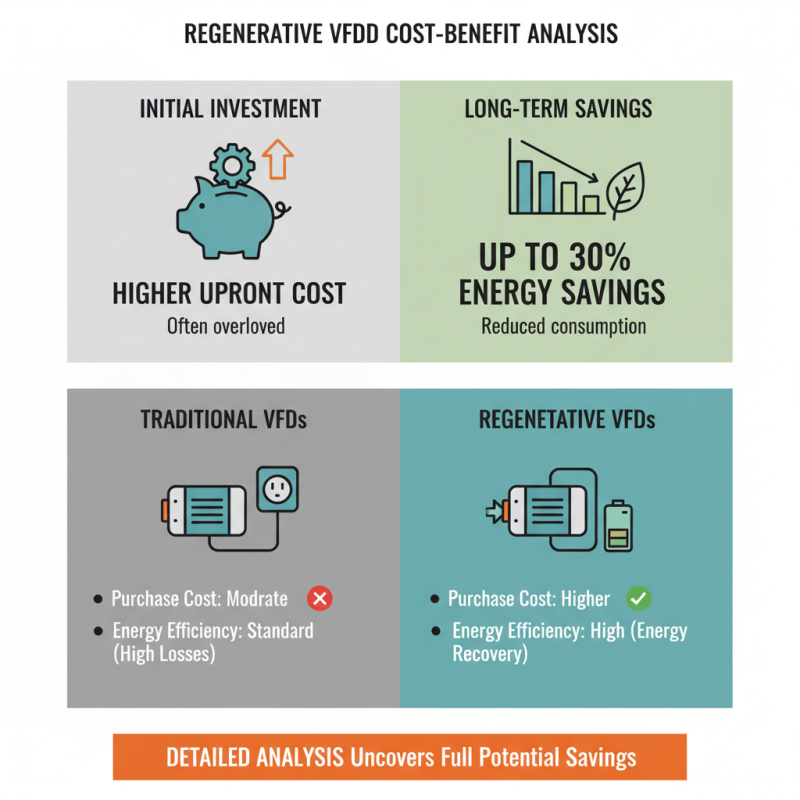
When budgeting for regenerative VFDs, it's crucial to assess both the purchase cost and long-term maintenance expenses. Research indicates that regenerative VFDs can save up to 30% on energy consumption compared to traditional drives. However, initial investments are often higher. Many industrial operators may overlook this upfront cost. A detailed cost-benefit analysis can highlight potential savings over time.
Maintenance is another critical aspect. According to a recent industry survey, routine maintenance can reduce operational costs by 15%. Neglecting this factor may lead to higher repair costs and downtime. Experts recommend budgeting at least 5-10% of the initial purchase price annually for maintenance. In this context, the choice of components, like those in Hitachi Vfd, can influence long-term reliability and efficiency.
Moreover, not all regenerative VFDs are created equal. Some systems may require more frequent servicing and parts replacement. Understanding the specific maintenance needs of the VFD you choose helps create a realistic budget. Ignoring these considerations can lead to unexpected expenses. Ultimately, thorough research and planning play a vital role in successful implementation.
FAQS
: Engage in activities you enjoy. Take breaks and practice mindfulness. Sometimes, writing down your thoughts helps.
Create a sleep routine. Limit screen time before bed. Consider a comfortable environment with low light.
Exercise releases endorphins, improving mood. Even a short walk can clear your mind and reduce anxiety.
Try deep breathing or meditation. Talking to a trusted friend can also provide relief. It's okay to seek help.
Focus on whole foods rather than processed ones. Portion control is key. Don't forget to enjoy your meals.
Reach out to friends or family. Join community groups to meet new people. Sometimes, simply sharing feelings helps.
Spending time outdoors can boost mood and reduce stress. Fresh air and greenery have calming effects.
Yes, it can. Writing helps process feelings and clarify thoughts. It’s a personal space for reflection and growth.
Self-care prevents burnout and improves overall health. Prioritizing yourself can be hard but is essential for well-being.
Set small, achievable goals. Celebrate progress, no matter how minor. Surround yourself with supportive people.
Conclusion
When selecting a regenerative VFD, it is crucial to first understand their functionality and benefits in industrial applications. Regenerative VFDs are designed to recover energy during braking, significantly enhancing system efficiency and reducing operational costs. Evaluating your power requirements is essential, as this determines the appropriate VFD capacity for your specific needs. Additionally, compatibility with existing equipment ensures a smooth integration process.
Further considerations include assessing the efficiency ratings and performance metrics of potential VFDs, which will impact long-term savings and system reliability. Space and installation constraints must also be evaluated to optimize the placement of the VFD units. Finally, budgeting for both the initial purchase and ongoing maintenance of regenerative VFDs is vital to ensure a successful investment in energy efficiency and system performance.